


Space Crafts That Teach Early STEM: Rockets, Helmets and the Solar System
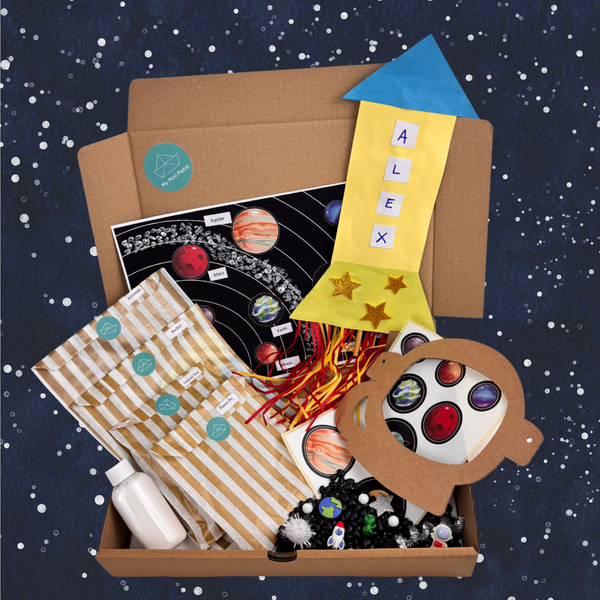
When a rocket lifts off it looks instant and effortless. Behind every launch, from the Apollo missions to NASA's Artemis programme taking astronauts back towards the Moon, are months of planning, building, testing and improving. That same process happens in miniature at your craft table. Here are three space crafts from our Space Activity Kit, and what each one is quietly teaching.
1. The astronaut helmet: stepping into the role
It looks like a simple craft, but making a helmet is a way into the whole subject. Helmets keep astronauts safe, let them talk to each other and let them explore. When a child makes and wears their own, they step into that role, and role play is powerful: it helps children understand the world while building skills in a way that feels like fun, not work.
Cutting shapes, threading string and sticking pieces in place support fine motor skills, hand-eye coordination and using both hands together, the foundations for writing, dressing and using tools. Following the steps builds attention and listening. And once the helmet is on, the talking starts: where they are going, what they can see, who they are helping. That is language and storytelling, which many young children still need plenty of practice at.
2. The build-a-rocket: plan, build, test, improve
Before any launch, engineers plan, build, test and improve. Children follow exactly that journey when they build a rocket. They find the body and the nose cone, decide where the flames go, add stars, shapes and letters, and notice what works and what needs changing.
As they build, they meet early STEM ideas without a worksheet in sight: cause and effect ("what happens if I move this?"), structure and balance, shape recognition, and the idea that a design can be changed and made better. Adding their name to the rocket turns it into gentle literacy practice; seeing their own letters on something they made makes letters meaningful. And sometimes the flames fall off. That is part of the learning too: each small wobble and second attempt builds resilience, patience and self-belief.
3. The solar system picture: big ideas, child-sized
Space is a huge concept, and creative play makes it manageable. Building a solar system picture, children learn the order of the planets from the Sun, placing each sticker carefully, which fixes names and positions far better than being told. Dotting the asteroid belt with a cotton bud and paint is a repeated, controlled movement that builds fine motor control and focus while feeling soothing, and it is a first lesson in pattern and spacing, which is early maths. Sensory, structured activities like this are especially helpful for children who need calm play, including many children with additional needs.
What children are learning across all three
- Stronger hands and coordination: cutting, threading, peeling stickers and placing small pieces.
- Focus and following steps: slowing down, looking closely and working through simple instructions.
- Language and imagination: the play and the talk that follow the making.
- Early STEM thinking: safety, design, cause and effect, and why things need testing.
- Resilience: trying again when it does not go to plan.
Questions to ask as they play
You do not need to teach or test. Just wonder together:
- Why do astronauts need helmets? What do you need to stay safe in space?
- What makes your rocket strong? What would you change if we built another?
- Why do you think rockets need testing before launch?
- Can you find Earth in your picture? What do you notice about the planets closest to the Sun?
- Where would you like to go today in your helmet?
Space kits for every age
- Space Activity Kit (ages 3 to 7): the astronaut mask, build-your-own rocket, solar system picture and a moon-surface sensory tray, with everything included.
- Space Project Kit (ages 7 to 9): the same three crafts plus a wooden space shuttle to build and paint, for children ready for a longer project.
- Space Sensory Kit: a moon-surface tray of black beans with planets, stars, aliens and glittery pom-poms.
More on the thinking behind the kits: how craft kits build foundation skills for academic success, what is so great about using scissors, and free STEM activities to try at home.


Leave a comment