


The Learning Bug: What Key Skills Do Mini Makers Develop Through Crafting?
From a first mumbled word and a wobbly step to the joy of tying our own shoelaces, learning is an incredible journey, and the lessons are everywhere. They do not need classrooms, textbooks or hours on a screen. Children learn best through play, and a craft kit is one of the easiest ways to get little ones thinking and building skills at home. New to crafting and wondering what it does for your child? Grab a cuppa and have a read.
What is crafting?
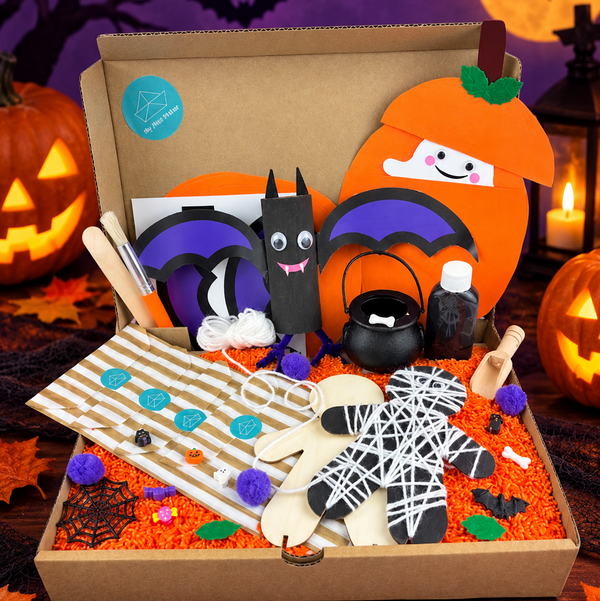
Crafting covers everything from painting and drawing to colouring, cutting and gluing. It does not have to be messy or hard work. You can gather paper, pens and paint for an ad-hoc afternoon, or let a kit do the planning: each themed My Mini Maker kit contains everything your child needs to create a world of their own, with activity sheets to guide them and nothing to shop for.
Why crafting matters for learning
Books, screens and classrooms all have their place, but every child benefits from a different way of learning, and for children under seven, play is the way that works best. Crafting at home lets children express themselves in a place they know, at their own pace. Putting together a spaceship, building a monkey or cutting out a ladybird, they are discovering new worlds and developing skills that textbooks do not reach. Creativity and play go hand in hand.
The skills crafting builds
Self-expression
Learning to express ourselves is a lifelong journey (some grown-ups are still working on it). It can start with something as simple as choosing a colour. Craft kits invite children to make their own creative choices, and those small decisions build lasting confidence. Ask why they chose the colour they did; you will be amazed by the answer.
Understanding the world
Every month's theme explores the world around us: how monkeys swing, snakes slither and chameleons change colour, how bees buzz and crickets chirp. Crafting lets children discover new worlds while creating their own, and the themes line up with the topics they meet at nursery and in Reception.
Trying again and patience
Anyone who has tried to glue together a swinging monkey knows it can take a bit of trial and error. Sometimes little crafters have to try again or find another way. That builds patience, problem solving and the understanding that it does not have to be perfect; the important thing is that they keep trying.
Fine motor skills
These are the small hand movements that everyday life depends on: holding a pencil, writing, doing up a coat. Squeezing play dough strengthens the small muscles, scissors build hand-eye coordination, and picking up and placing tiny pieces develops the pincer grip. Children build all of it without noticing, which is the point. Read why we are obsessed with fine motor skills.
Tidying up
Grown-ups, rejoice. As children take ownership of their workspace and pride in what they have made, they start to see that keeping things tidy helps them, and that it can even be fun. Disclaimer: it may take a while before they feel the same about the washing up, although our Iona now treats it as a reward after baking, so miracles do happen.
How to try crafting at home
Choose between activity kits for ages 3 to 7, sensory kits, and project kits for ages 7 to 9, in whichever theme your little learner will love. Or subscribe and get a new theme every month with free delivery. When the box arrives, everything is inside: open it, clear the table and enjoy. If you would rather start with things you already have, our free activity ideas have step-by-step guides and materials lists.

Leave a comment