Activities by Age

How to Get Started: Crafting With Toddlers

The essentials worth owning and the routine that makes paint and glue at home painless. Everything we learned crafting with a toddler and a newborn in the same room.

Updated 13 November 2020

Toddler crafting at a table with paint and paper

Quick answer

A washable splash mat, an apron or old T-shirt, wipes, kitchen roll, a jar for brushes, child-size scissors and washable markers and glue. Set little ones up in the high chair, keep messy play on the mat, and have the sink ready before you start.

We all know how much children love making things, and we all know what it does for them: fine motor skills and spatial awareness, but also problem solving, early maths from counting, early science from experimenting with materials, and, most of all, confidence and a way to express what they feel.

What puts most of us off is the mess. It is easier to book a class than to get the paint out at home. It does not have to be like that, and a small amount of kit and a simple routine make the difference. Here is what we use time after time, and how we set up.

1. Set up a mess-proof craft station

The kit list and the routine that let you say yes to paint and glue at home without dreading the clean-up.

  • Best forMaking crafting at home easy and repeatable
  • Age18 months to 5
  • Time10 minutes to set up
  • Mess levelLow
  • DifficultyEasy
  • CostUnder £20 for the essentials, most reusable
You will need

  • A splash mat that can go in the washing machine, for the table, the floor or the garden
  • A smock, apron or an old oversized T-shirt to go over clothes
  • Wipes, or reusable cloth wipes
  • Kitchen roll for spillages, and there will be plenty
  • An old jar or cup for dirty brushes and sticker backing
  • Child-size scissors, and left-handed ones if your child needs them
  • Washable markers, crayons, glue and glue spreaders

How to set it up

  1. Little ones: put them in the high chair. It contains the mess and helps them focus, since attention spans are short.
  2. Older children: cover the chair with an old towel so stains stay off anything that cannot be wiped.
  3. For messy play on the floor, use the splash mat and set the rule that messy play stays on the mat.
  4. Before you start, empty and rinse the sink and put a towel beside it.
  5. When you finish, wipe the worst off while they are still on the mat, then take them to the sink. Small children usually find being lifted into the sink hilarious.
  6. Once they are clean and dressed, give them a book or a couple of toys in the high chair while you tidy up.

Why it helps

Arts and crafts develop fine motor skills and spatial awareness, but also problem solving and reasoning. Counting introduces early maths, experimenting with materials introduces early science, and most of all making things builds confidence and gives children a way to express how they feel. The barrier for most of us is the mess, and a ten-minute set-up removes it.

Safety notes

Never leave a child in the sink unattended, check they cannot slip or reach the hot tap, and use child-safe scissors with an adult alongside.

Activity Kits for 3 to 7 Year Olds

Featured kit

Or skip the shopping list altogether

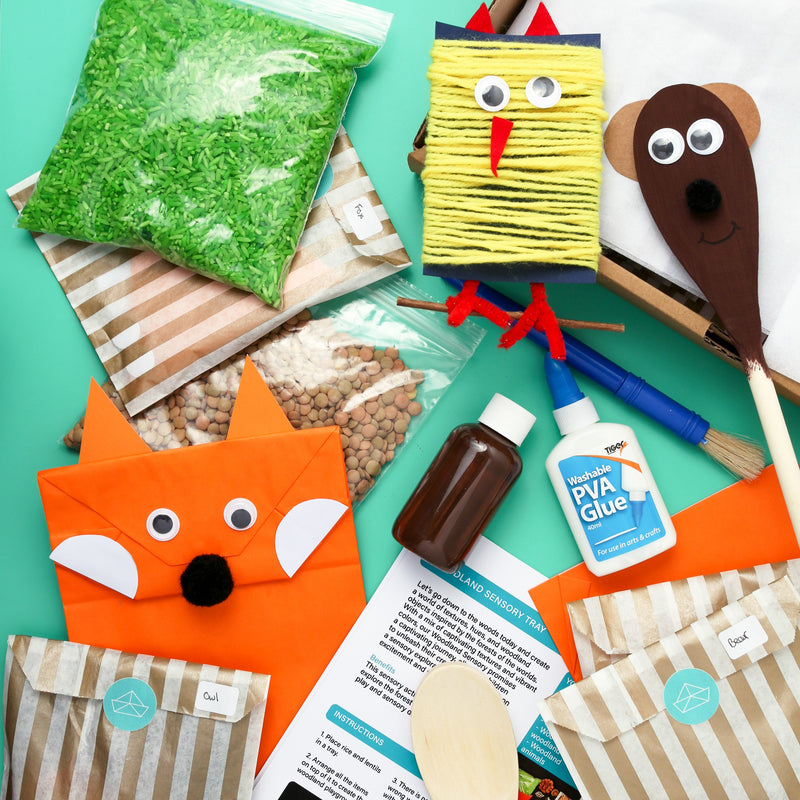
Every My Mini Maker kit arrives with the crafts, the materials and the instructions ready to go. No prep, and no rushing out for glue.

Most importantly, have fun, do not panic about the mess, and enjoy making memories together. We would love to see what you make: tag us on Instagram or Facebook @myminimaker, or use #MyMiniMaker.