Sensory Play

Sensory Tray Ideas for Kids: Safari, Farm and Ocean Trays to Make at Home

Three simple sensory trays you can set up in minutes with household items: a rice safari, a cereal farm and a blue-water ocean. Each one lists what you need, the steps, what children practise and the safety points to check first.

Updated 14 September 2026

Quick answer

A sensory tray is a shallow container filled with a loose material such as rice, oats or water, plus a few figures and tools for scooping and pouring. To set one up, choose a filler that suits your child's age, add a small-world theme, put the tray on a wipe-clean mat and supervise throughout. Most trays take under ten minutes to prepare.

Sensory trays are one of the easiest ways to give children hands-on play at home. They cost very little, they reuse things you already have in the cupboard, and they can be themed around whatever your child is interested in this week.

The three trays below are the ones we come back to most often. Each includes a materials list, step-by-step setup, a note on what children practise while they play, and the safety checks to make before you start. Pick one, set it up, and let your child lead.

1. Safari Sensory Tray

Create a simple safari scene using rice, animal figures and scoops. Children can explore textures, move the animals through the tray and invent their own safari adventures.

  • Best forSensory play, imaginative play and fine motor practice
  • Age3+ years
  • Time15–20 minutes
  • Mess levelMedium
  • DifficultyEasy
  • CostUses household items or under £5

You will need

  • Large tray or shallow container
  • Dry rice or another suitable sensory filler
  • Safari animal figures
  • Small cups, scoops or spoons
  • Optional leaves, stones or cardboard trees

How to set it up

  1. Pour a shallow layer of rice into the tray.
  2. Add the safari animal figures around the tray.
  3. Place cups, scoops and spoons beside the tray.
  4. Invite your child to move the animals, scoop the rice and create different safari scenes.
  5. Encourage them to describe the animals, the sounds they make and where they might live.
  6. When play is finished, return the loose materials to a sealed container for another day.

Why it helps

Scooping, pouring and moving small figures can help children practise hand control and coordination. Pretend play can also encourage vocabulary, storytelling and creative thinking.

Safety notes

Adult supervision is required. Dry rice and small animal figures may present a choking risk and are not suitable for children who still regularly place objects in their mouths.

2. Farm Sensory Tray

Build a miniature farm using dry cereal, oats or pasta, together with farm animals and simple containers. Children can feed the animals, build pens and create their own farm stories.

  • Best forSmall-world play, sensory exploration and language development
  • Age3+ years
  • Time15–25 minutes
  • Mess levelMedium
  • DifficultyEasy
  • CostUses household items or under £5

You will need

  • Large tray or shallow container
  • Dry oats, cereal or pasta
  • Farm animal figures
  • Small bowls or containers
  • Wooden blocks, craft sticks or cardboard
  • Spoon or scoop

How to set it up

  1. Add the dry sensory material to the tray.
  2. Arrange the farm animals around the tray.
  3. Use blocks, craft sticks or pieces of cardboard to make simple animal pens.
  4. Add small bowls for pretend animal food.
  5. Invite your child to scoop, pour, feed the animals and move them between the different areas.
  6. Ask questions such as, “Which animal lives here?” or “What should we feed the cows?”

Why it helps

Handling the materials can support fine motor practice, while sorting animals and creating farm scenes can encourage problem-solving, vocabulary and imaginative play.

Safety notes

Supervise throughout the activity. Check that all figures and materials are suitable for your child’s age. Do not use small loose materials with children who may place them in their mouths.

3. Ocean Sensory Tray

Make an ocean-themed sensory tray using blue water, sea creatures and simple pouring tools. Children can rescue animals, create waves and explore how objects move through water.

  • Best forWater play, sensory exploration and imaginative play
  • Age3+ years
  • Time15–20 minutes
  • Mess levelHigh
  • DifficultyEasy
  • CostUses household items or under £5

You will need

  • Waterproof tray or shallow container
  • Water
  • Optional blue food colouring
  • Plastic sea creature figures
  • Cups, spoons or small containers
  • Optional shells, smooth stones or sponges
  • Towel or wipe-clean mat

How to set it up

  1. Place the tray on a waterproof mat or towel.
  2. Add a shallow layer of water.
  3. Add a very small amount of blue food colouring if desired.
  4. Place the sea animals, shells and stones into the water.
  5. Provide cups and spoons for pouring, scooping and moving the animals.
  6. Encourage your child to create waves, sort the animals or invent an underwater rescue story.
  7. Empty and dry the tray and materials after play.

Why it helps

Pouring and scooping can help children practise coordination and control. Water play also gives children opportunities to explore movement, floating, sinking and imaginative storytelling.

Safety notes

Constant adult supervision is required around water, even when only a shallow amount is used. Clean and dry all materials after the activity. Do not use shells, stones or small figures with children who may place them in their mouths.

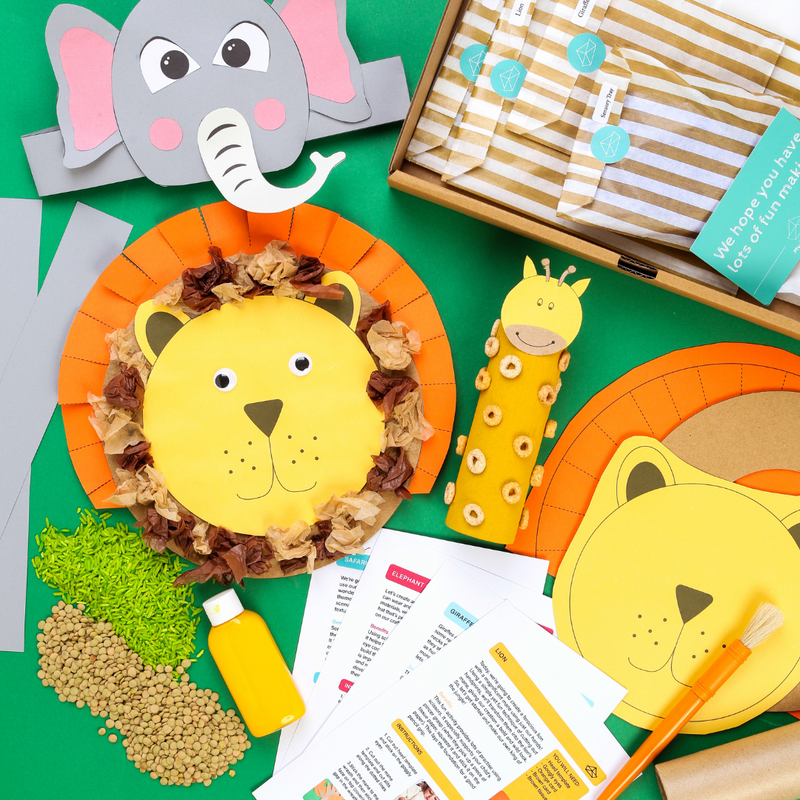
Safari Activity Kit contents: paper plate lion, elephant and giraffe crafts, safari sensory tray materials and instruction cards

Featured kit

Make it easier with a kit

The Safari Activity Kit includes a ready-made safari sensory tray alongside three animal crafts, with the filler, figures and scoops already measured out. Everything arrives in one box, so there is nothing to shop for.

Safari Activity Kit · £25.95

View the kit

Once your child has tried these three, the same tray works for almost any theme: a construction site with lentils and toy diggers, a garden with soil and plastic flowers, or a snow scene with cotton wool and polar animals. Swap the filler and the figures and the play changes with them.

Keep each filler in a sealed tub between sessions so it stays clean and can be reused for weeks. The sensory play hub has more ideas for younger children and for lower-mess days, and every My Mini Maker kit includes a themed tray if you would rather skip the setup altogether.

Frequently asked questions

What can I put in a sensory tray?

Common options include rice, pasta, water, sand, shredded paper, scoops, cups and small themed toys. Choose materials that are appropriate for the child’s age and supervise closely.

What age is sensory play suitable for?


Sensory play can be adapted for many ages. The materials, level of supervision and complexity should be matched to the child’s stage of development.

How do I make sensory play less messy?

Use a large tray, place it on a wipe-clean mat, keep the quantity of filler small and choose low-mess materials such as large pasta, pom-poms or shredded paper.

Does sensory play require adult supervision?

Yes. Adults should supervise sensory activities, especially where small parts, water, loose fillers or materials that could be mouthed are involved.